Room for Two


A dance floor, for two people only.
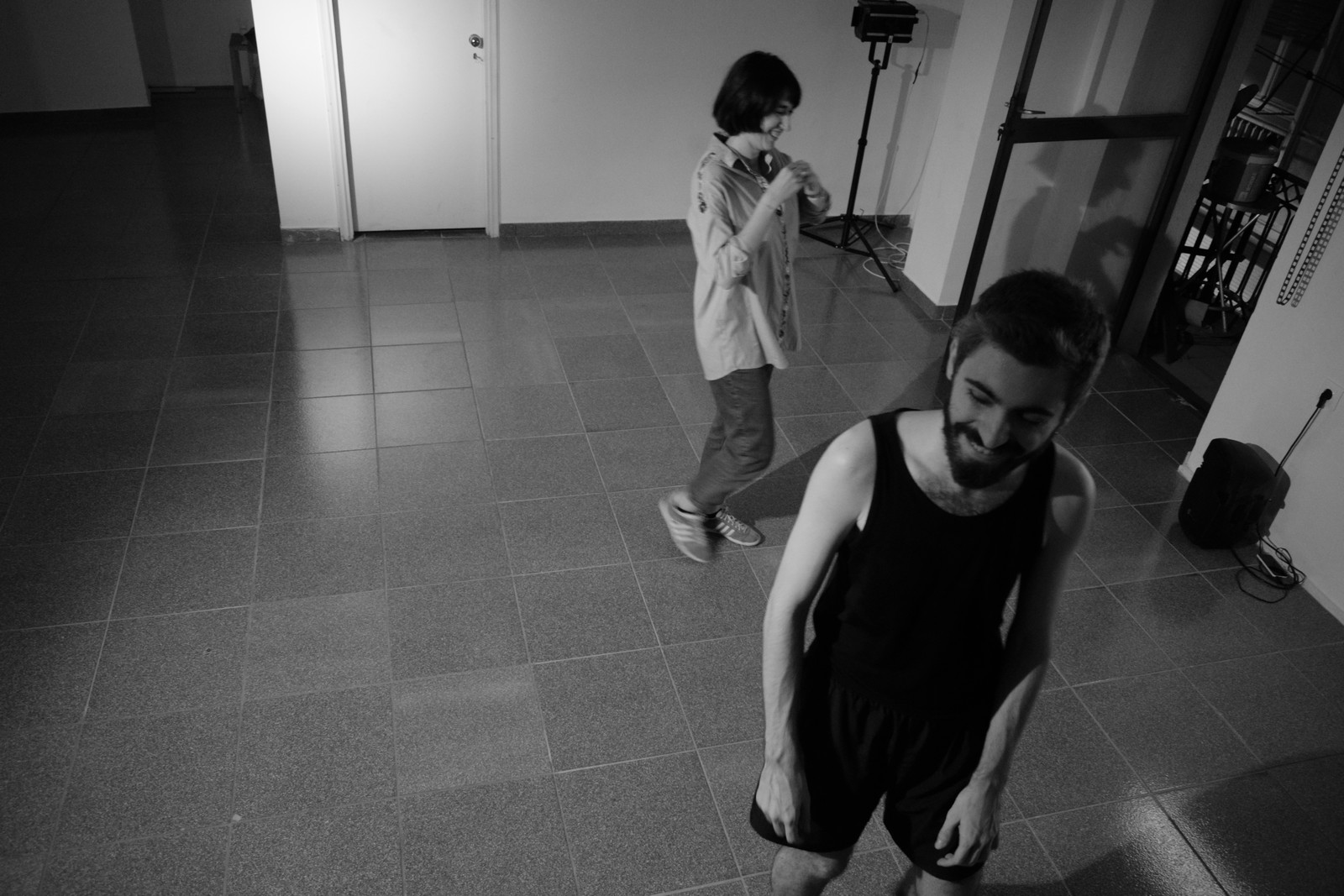
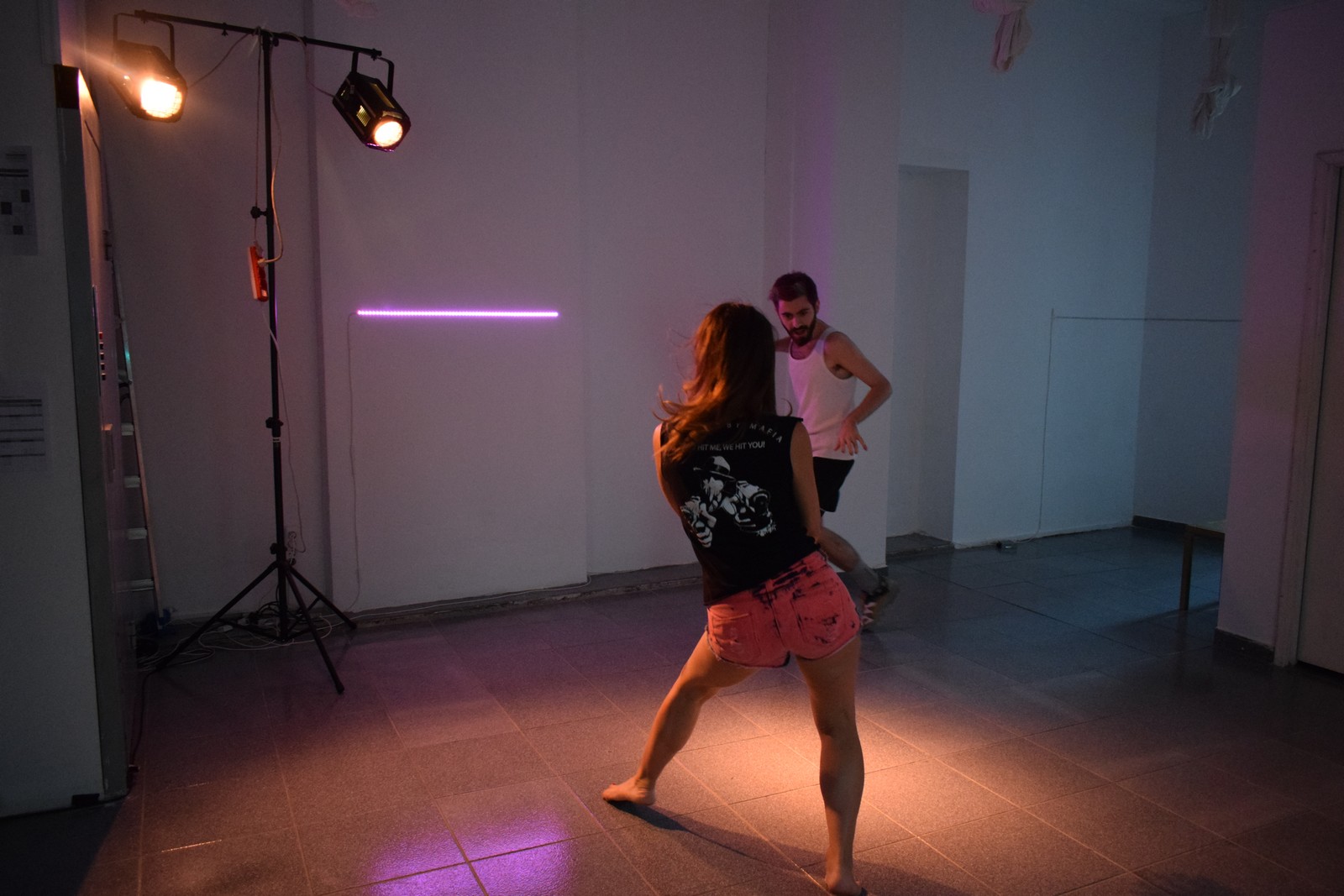
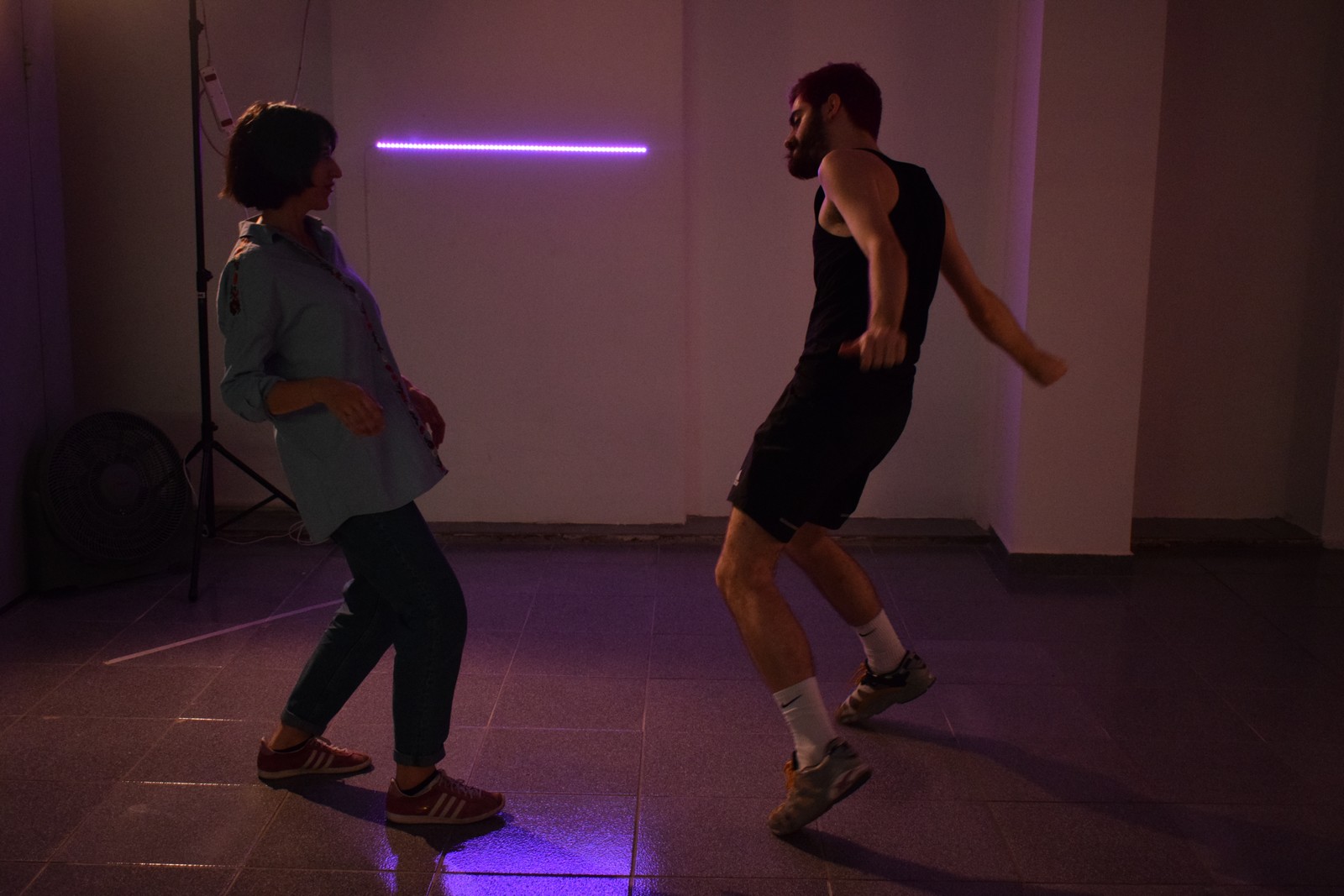
This performance is a personal invitation to dance. The artist and one participant take equal roles in the creation and development of the work. They dance and improvise throughout its duration, as they take cues from the music and the dynamic between them. The set resembles that of a dance club — dark with dim lights; but it’s exclusively for two people, with no other member of the audience viewing or entering before the previous session ends. “Room for Two” creates a safe space, where participants can let go, be present, and tune into the rhythm of their bodies – to explore how it responds to sound, the space, and the connection they build with the performer.
Participatory performance with 1 person
Duration: 30 minutes per session
Premiere at Athens Epidaurus Festival. A production of The Performance Shop.
The seeds for this work were planted right after my previous one, “I see you.”
During the performance, as I was walking with the participants in the streets of Molyvos, I found myself longing for one thing: to see their eyes more. They were following me, walking behind me. I had put myself in a position where our gazes could not meet — despite the title. I felt better when I could see them. So, later on, I gave myself a direction–my next work should be the direct opposite: we must have direct eye contact at all times.
The following day, I found myself at a party, dancing ecstatically, bumping like a goat on drugs, in what was basically a cathartic release after a brutal breakup.
Fast forward to autumn of that year, when I first watched “Call Me by Your Name” by Luca Guadagnino. The movie floored me. I can recall feeling like I was seeing myself on screen. Later, reading more about the film, I came across an article in The Atlantic about a particular scene.
Elio is watching Oliver dancing to the tune of “Love My Way” by the Psychedelic Furs. Longing — queer longing, in this case — is unspoken. It’s only their gazes and their bodies, connecting to the music, both exploring their sexuality, without the need to speak it.
As Brandon Tensley writes:
“The at times unspoken longing that ricochets between Elio and Oliver—a lingering stare across the dance floor—is exhilarating and sensuous in a way language isn’t always able to be. A dance can’t last forever, of course, and it doesn’t, necessarily, promise a rosy boy-meets-boy future. But it can leave an indelible mark on the dancers’ lives, long after the night is over, again calling to mind [Virginia] Woolf’s words. “This one night we will be mad,” the author wrote. “What matters anything so long as one’s step is in time—so long as one’s whole body and mind are dancing, too—what shall end it?”
The writer refers to a letter by Virginia Woolf, in which she speaks about dance and its cathartic potential: “We dance to drown our sorrows—but dance, dance—if you stop you are lost.”
And that’s when it all came together. I’m not a dancer or a choreographer, but it all made perfect sense. The performance would be an invitation to dance. There would be no need for words, no need even for an audience. A wholly personal experience, we would only have the music and the way we react with each other through gaze, body, and rhythm. And it would be entirely improvised on the spot. Equal to equal.
For me, it worked like a relationship: it all starts with flirting (our mutual gazes, in this case).
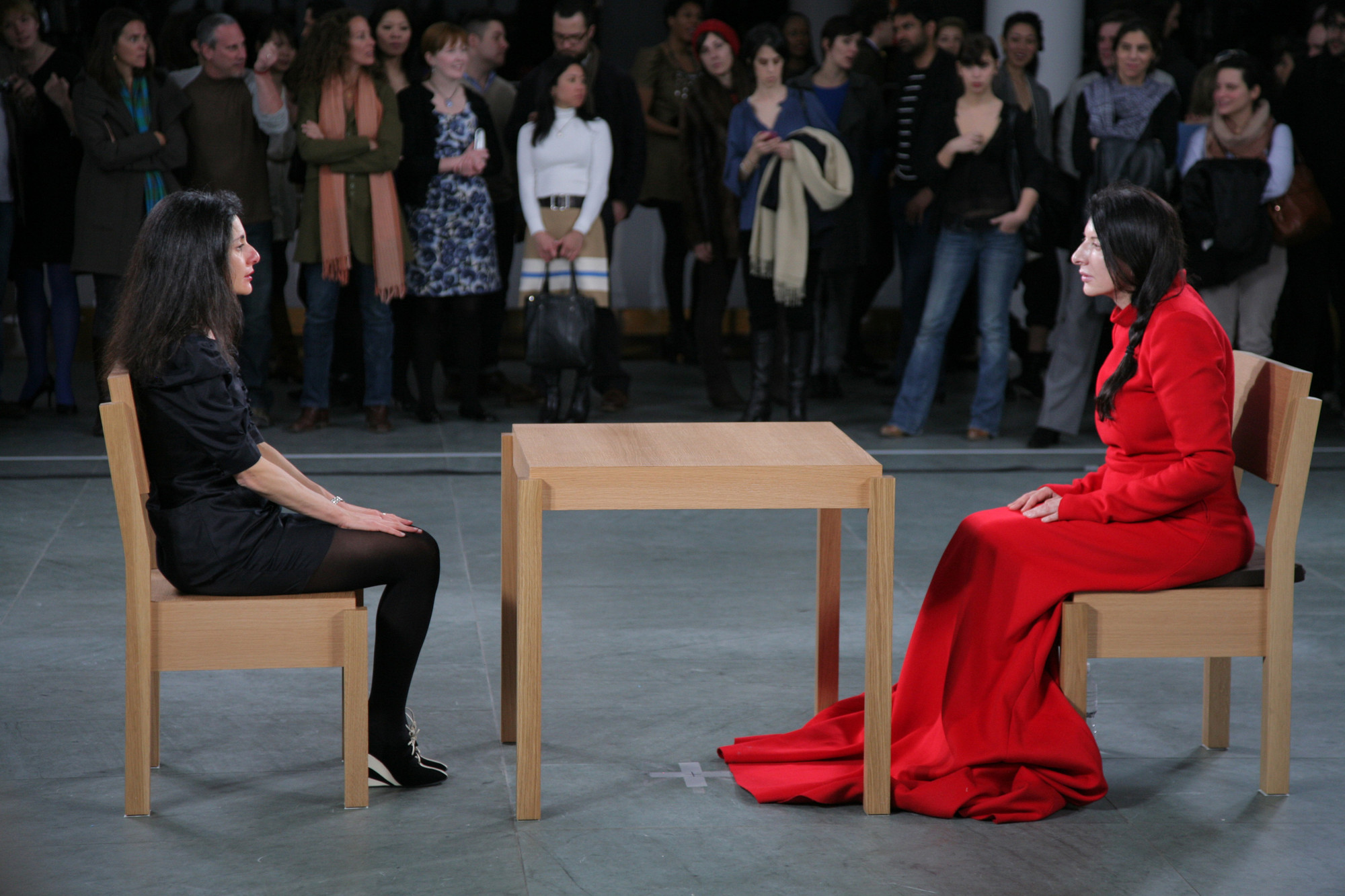
Undeniably, there is a clear reference to Marina Abramović’s “The Artist is Present,” her 2009 seminal performance. What I cherish so much about this work is how it reduces everything to the absolute necessary: the presence, the eyes, and the connection that sparks.
I was very lucky in the sense that, at the same time, Lia Haraki, a wonderful artist from Cyprus, was bringing her project, “The Performance Shop,” to Athens for the Athens Epidaurus Festival. They had an open call, seeking performances to include in their program. I applied and, thankfully, mine was selected.
The context was that each participant could book a session of 30 minutes with me. The playlist was different for each, with a variety of tunes, from four-on-the-floor beats to slower ones. My intention was to create a space for the audience and me to find release on the dancefloor. Together. The work would not exist without them. I could not be without them, either, anyway.
In most two-person dances, the couple usually has a clear structure: one leads and the other one follows. Each assumes a role, respectively. We often occupate similar positions in real-life relationships too. Yet I strongly disagree with this dichotomy because it reduces human complexity to rigid labels that aren’t really that rigid—in fact, they’re laced with contradictions. Think of it this way — you’re seeing someone you like and you want to make a move. You get the green light when they lay eyes upon you, when maybe they’re smiling, or when their body language shows they’re open and willing to accept you. Having the capacity to understand this is key, of course, but who’s really making the first move here? The one signaling their intention or the one listening to and acting upon it?
My main source of research while making “Room for Two” was attachment theory in psychology. In a few words, it posits that our early relationships with our caregivers shape our patterns in our adult relationships. Generally, there are four attachment styles: secure, anxious, avoidant, and disorganized. Secure types feel comfortable with intimacy and autonomy, trusting others and managing emotions well. Anxious ones seek closeness but fear abandonment, often feeling insecure and overly dependent. Avoidants value independence and suppress emotional needs, keeping others at a distance. And disorganized ones struggle with both intimacy and independence, often acting erratically due to fear and past trauma. People can show up with different styles in different moments of their lives, depending on the circumstances and who they connect with. I think the work brought out some form of each person’s attachment style.
For example, some people found it difficult to connect; some struggled with the intimacy of the format (I was the only one seeing them and my undivided attention was on them at all times); some wanted to control every single move; and, frankly, most wanted to be led by me in this dance. Take what you will from these observations.
My most difficult moment was when I felt one person not engaging with me. I still remember thinking “this isn’t working, I need to try harder to connect,” probably striking a nerve with my own anxieties.
But I will never forget a magical session: the dance I had with one participant was everything I had imagined this work could be and more. We were both fully present, signaling our intentions clearly, both super aware and responding to each other’s moves and body language. Both were leading and following. We were equals. At one point, towards the end, there was a slower song and we ended up in an embrace. We were moving slowly, allowing the moment to breathe. It was then that I suddenly felt an immense sense of security, probably for the first time—that everything was ok. It was a bolt of electricity, so visceral, such a precious emotion I almost started crying. He felt the same when we spoke afterwards.
I am not saying that you can reduce a human being to 30 minutes with a stranger on a random, hot day in June. Nevertheless, I’m almost certain that, sometimes, a mutual dance can be more revealing about who we really are than language can be.

